Local Tree Service Near Me: Comprehensive Community Tree Care Solutions
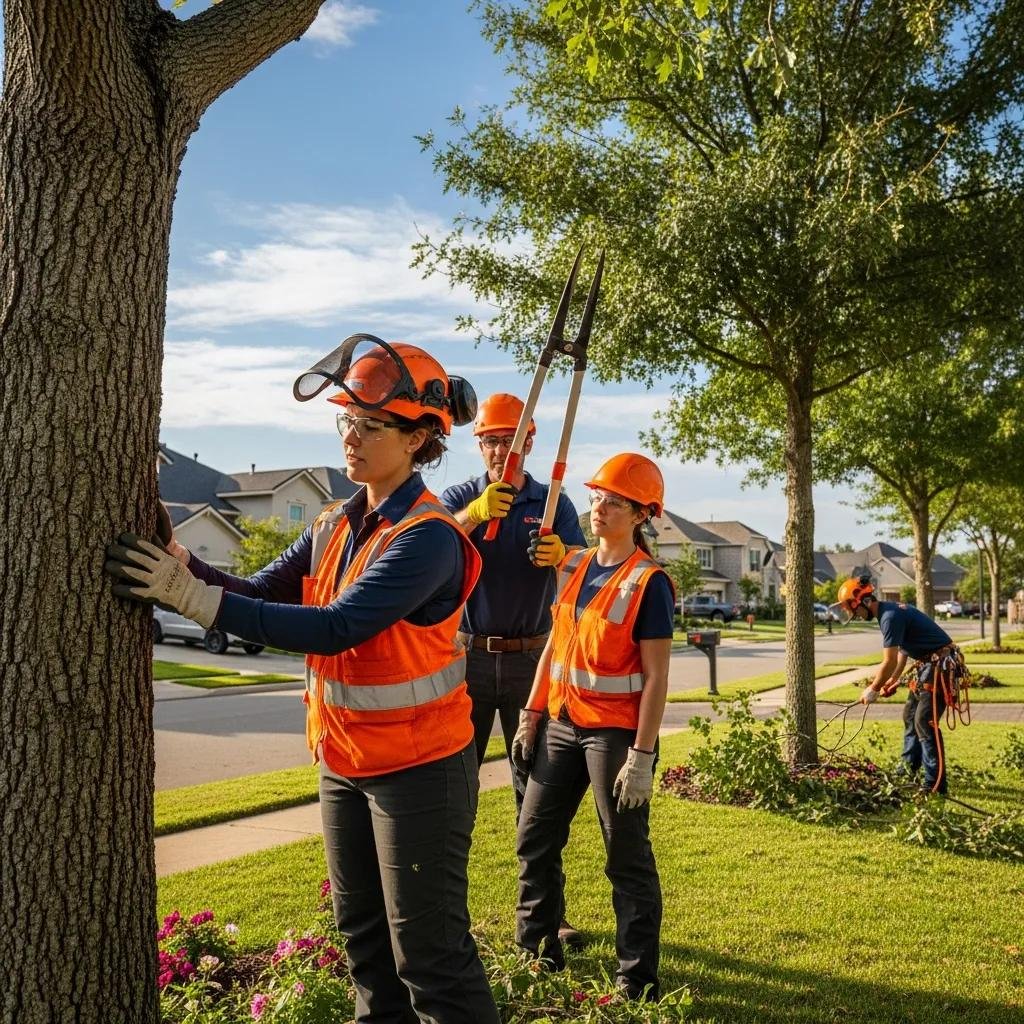
Local tree service near me describes neighborhood-focused arboricultural services that protect property, preserve tree health, and maintain public safety through professional care. This article explains the core local offerings—tree removal, tree trimming and pruning, stump grinding, emergency tree services, and certified arborist consultations—and why each matters for homeowners and businesses. Many property owners face risks from unstable trees, hidden disease, or storm damage that can cause costly structural harm; understanding the services available nearby helps reduce those risks and supports faster recovery after incidents. Readers will learn which service fits common scenarios, how certified arborists diagnose and treat tree health problems, what to expect from emergency response and storm cleanup, and why stump grinding is often the right follow-up after removal. The guide also outlines practical steps to request on-site estimates, schedule work, and prepare a property visit so you can get reliable pricing and fast service. Throughout, keywords like tree service near me, stump grinding cost, ISA certified arborist, and emergency tree service are woven into actionable guidance so you can make informed decisions for your community trees.
Understanding the potential dangers posed by trees underscores the critical role of professional risk assessment in protecting both property and people.
Tree Risk Assessment & Public Safety
In the presence of a target, tree failures have the potential to damage property, disrupt services, or threaten public safety. Worldwide, several qualitative methods have been developed to provide a systematic approach for tree risk assessment and management.
Risk assessment and risk perception of trees: A review of literature relating to arboriculture and urban forestry, RW Klein, 2019
What Are the Essential Tree Services Offered Locally?
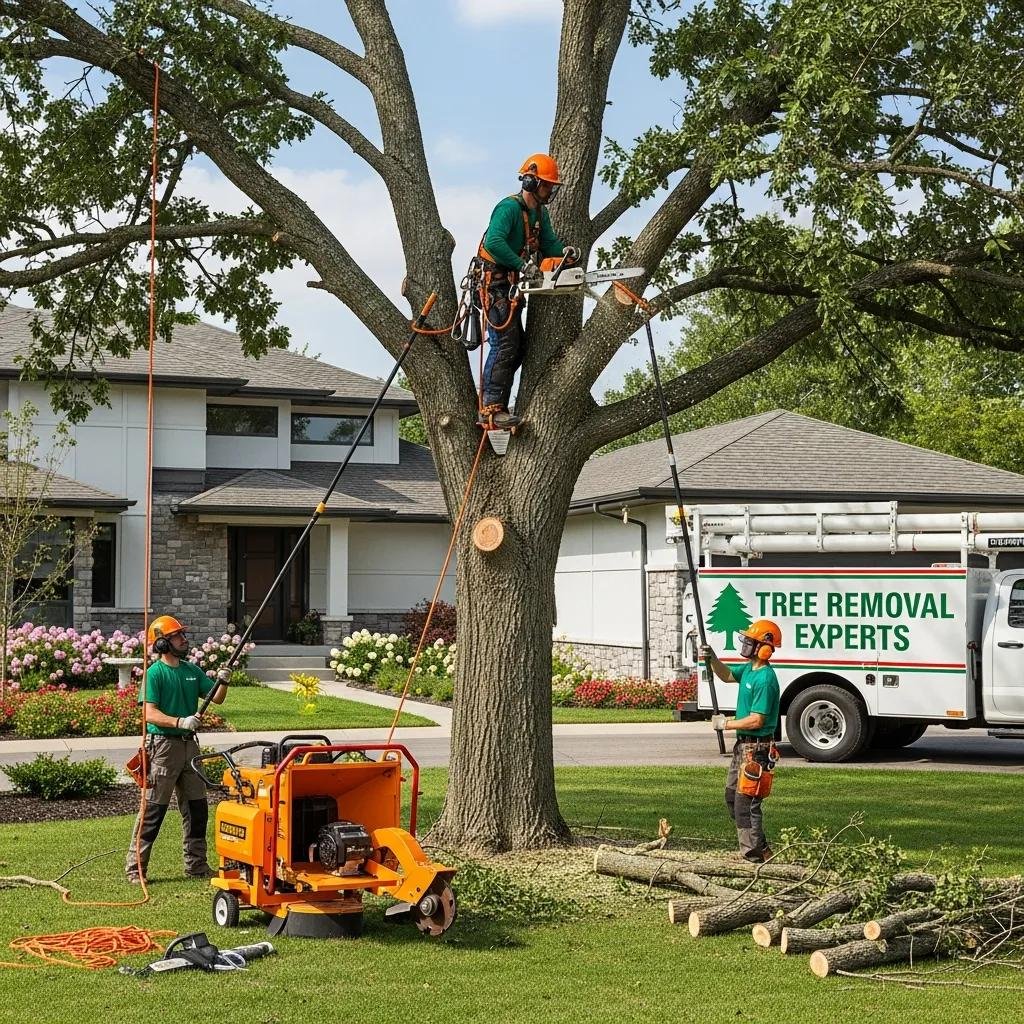
Essential local tree care services include removal, trimming and pruning, stump grinding, emergency tree services, and arborist consultations that together protect safety, property value, and tree health. These services function as an integrated set of arboricultural services: removal eliminates hazards, trimming preserves structure and health, stump grinding removes trip hazards and disease reservoirs, emergency services deliver rapid mitigation after storms, and arborist consultations guide long-term tree management. Equipment and safety protocols—rigging, cranes, protective exclusion zones, and insurance-backed operations—ensure property protection during interventions and reduce collateral damage to landscapes and nearby structures.
Below is a concise list that clarifies what homeowners and businesses can expect when searching for a local tree service.
The core local services include:
- Tree Removal: Safe removal of hazardous, dead, or structurally unsound trees to protect people and property.
- Tree Trimming and Pruning: Targeted cuts to improve structure, reduce wind load, and promote tree health.
- Stump Grinding: Mechanical removal of the visible stump and portions of roots to prevent tripping and pests.
- Emergency Tree Service: Rapid response for fallen trees, limbs threatening structures, or blocked roads.
- Arborist Consultations: Expert assessments, risk reports, and treatment plans from certified professionals.
This short inventory clarifies when each service is appropriate and leads naturally to a quick comparison of typical outcomes for common use cases.
To help compare core services at a glance, the following table maps common service entities to when they are used and the typical outcome or benefit.
Different services address distinct problems and produce predictable outcomes for property owners.
| Service | When / Why | Typical Outcome / Benefit |
|---|---|---|
| Tree Removal | Dead, dying, or hazardous trees near structures or utilities | Eliminates collapse risk; protects buildings and vehicles |
| Tree Trimming & Pruning | Overgrown canopy, weak limbs, clearance needs, or health maintenance | Improved structure, reduced storm damage risk, better sunlight and aesthetics |
| Stump Grinding | After removal to remove trip hazards, permit replanting, or prevent pests | Cleared planting space, lower pest/disease risk, improved yard usability |
| Emergency Tree Service | Fallen trees, limbs on structures, blocked access, or imminent failure | Rapid hazard mitigation, coordinated safety response, minimized damage |
This comparison helps owners decide whether they need immediate removal, preventive pruning, or consultative arborist evaluation, and it transitions into how professionals carry out removals safely.
How Does Professional Tree Removal Ensure Safety and Property Protection?
Professional tree removal begins with a risk assessment that identifies failure points, load-bearing concerns, and any necessary permits, and it proceeds using specialized rigging and exclusion protocols to protect surrounding property. Crews stage equipment—bucket trucks, cranes, chainsaws—and establish exclusion zones while using directional felling and controlled lowering to minimize impact on lawns, structures, and utilities. Insurance coverage and adherence to municipal permit requirements reduce liability and ensure that the work meets local ordinances, while experienced crews apply industry-standard safety gear to protect workers and bystanders. After the main trunk is removed, crews perform site cleanup and often offer stump grinding or replanting guidance, so the property is left safe and ready for restoration. These safety-first practices limit collateral damage and shorten the time homeowners spend managing post-removal repairs.
The use of specialized rigging techniques is paramount in professional tree removal, especially when dealing with complex situations where free-falling is not an option.
Professional Tree & Limb Removal Rigging
The intent of this paper is to briefly detail principles and concepts of rigging for tree and tree limb removal. This paper is intended as a reference tool for tree workers already skilled in tree removal techniques. It is in no way a substitute for hands-on instruction by skilled professional arborists. Rigging becomes necessary when free-falling is not possible because: a) a structure is in the way, b) sensitive landscaping would be damaged, or c) energized conductors or some other obstacle present a hazard.
Rigging for removal, 1989
This emphasis on risk assessment naturally raises the question of preventive measures, which is the subject of professional trimming and pruning practices explored next.
What Are the Benefits of Expert Tree Trimming and Pruning Services?
Expert trimming and pruning improve tree health by removing dead or diseased limbs, correcting structural defects, and shaping canopy architecture to reduce wind resistance and decay points. Trained crews apply species-specific pruning techniques and seasonal timing—such as crown cleaning in late winter or canopy thinning before storm season—to support recovery and long-term growth while avoiding stress that can invite pests. Benefits include lower storm-damage liability, improved sunlight penetration for underplantings, and enhanced curb appeal that maintains property values; pruning also helps detect early disease symptoms for treatment. When done properly, pruning strengthens branch unions and reduces the chance of catastrophic limb failure, which decreases emergency callouts and costly repairs. Understanding these benefits leads into why certified arborist input sometimes supersedes routine trimming for complex health or structural concerns.
How Do Certified Arborist Services Enhance Local Tree Health?
Certified arborist services provide expert diagnosis and treatment planning that extend beyond basic maintenance, combining formal training with diagnostic tools to manage pests, diseases, and structural risk. An ISA certified arborist brings systematic inspection methods—canopy and root collar inspection, decay detection, and risk assessment—to identify hidden issues that general crews may miss, and then recommends targeted interventions such as fertilization, cabling, or selective removal. These specialists can produce written reports for homeowners or property managers that document risk and justify remedial work for insurance or permitting purposes, and they coordinate with municipal regulators when required. Because arboricultural services act at the intersection of science and practical fieldwork, certified arborists improve long-term urban canopy health and ensure that interventions align with current research and best practices. The diagnostic focus of arborist work leads directly to a closer look at the specific expertise and tools certified professionals bring to tree care.
What Expertise Do ISA Certified Arborists Bring to Tree Care?
ISA certified arborists demonstrate formal training in tree biology, diagnosis, and safe work practices, and they routinely apply tools such as increment borers, resistographs, and root-zone assessments to evaluate internal decay and structural integrity. Their skill set includes recognizing signs of vascular disease, insect infestation, and unfavorable soil conditions, enabling evidence-based treatment plans that balance preservation against removal. Arborists also provide prescriptions for cultural treatments—mulching, targeted fertilization, and irrigation adjustments—that improve resilience and reduce long-term treatment costs. By documenting findings and suggested actions, arborists help property owners prioritize interventions and avoid unnecessary removals, and their expertise frequently shortens the path from problem discovery to effective remediation. These diagnostic capabilities segue into the specific assessment steps used to manage tree health and disease.
How Are Tree Health Assessments and Disease Management Conducted?
Tree health assessments follow a structured sequence: visual canopy inspection, root and soil evaluation, targeted sampling for lab analysis, and risk scoring to determine intervention urgency and method. Inspectors note leaf discoloration, dieback patterns, cavity development, and pest galleries, then correlate those symptoms with soil tests or laboratory pathogen identification to choose chemical, cultural, or mechanical treatments. Disease management ranges from pruning for improved airflow and sanitation to targeted fungicide or insecticide application when appropriate, always paired with follow-up monitoring to confirm recovery and adapt treatment schedules. Effective programs emphasize prevention—proper watering, mulch management, and maintaining root health—because healthy trees are less susceptible to pests and pathogens, reducing the need for drastic measures like removal. Understanding assessment and management techniques directly informs the protocols used during emergency responses, where speed and triage dominate decision-making.
When Is Emergency Tree Service Necessary and How Is It Delivered?
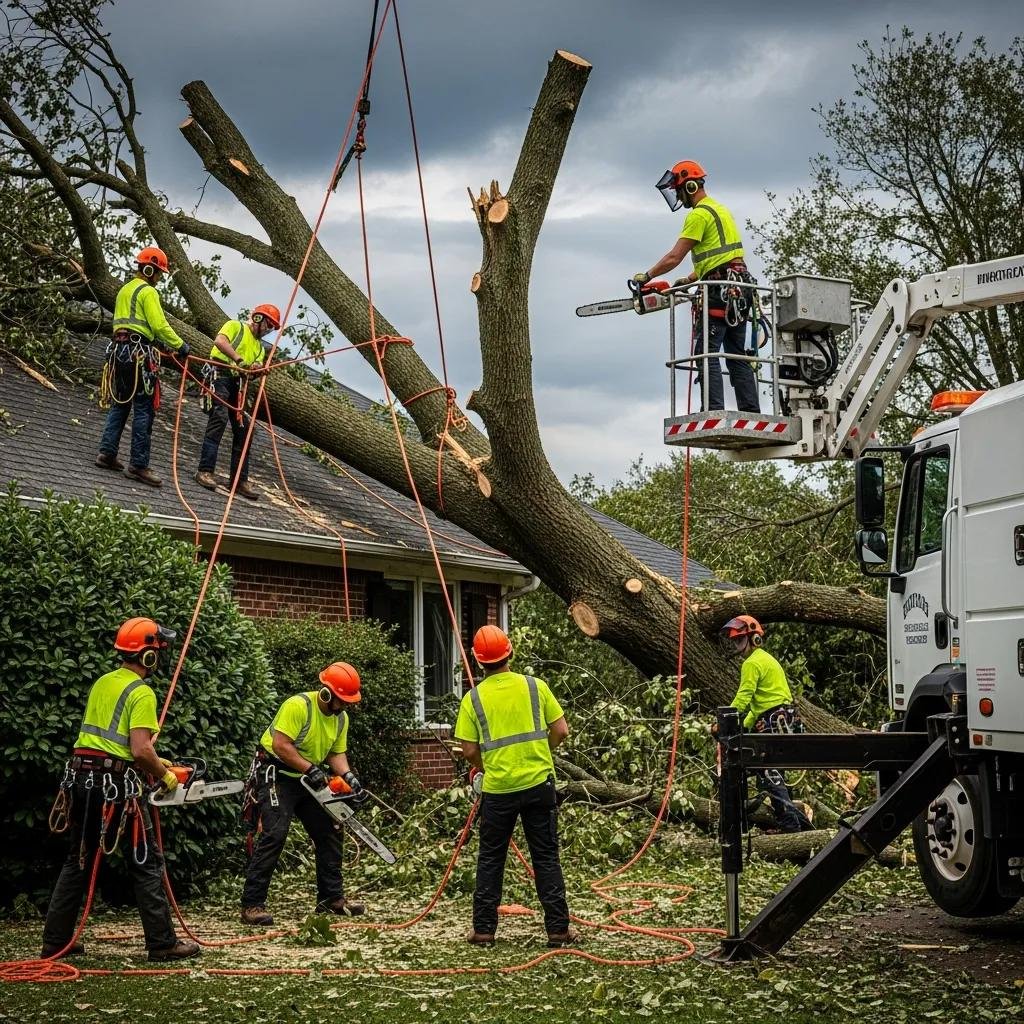
Emergency tree service is necessary when trees or large limbs present an immediate threat to life, property, or critical access, and response is delivered via rapid triage, safety containment, and prioritized removal or stabilization. Emergency scenarios require 24/7 readiness because storms, vehicle collisions, or sudden structural failure can create hazards that escalate quickly; crews first secure the scene, coordinate with utility providers if lines are involved, and then perform staged removals using rigging to protect structures. Rapid-response protocols emphasize preserving life and preventing secondary damage, so teams may implement temporary shoring or protective measures before full cleanup. Clear communication with property owners and emergency services shortens restoration time and helps prioritize tasks like road clearance or structural extraction. The immediacy of emergency work prompts a structured comparison of typical scenarios and the standard response steps that crews follow.
To help homeowners triage urgency, the table below lists common emergency scenarios, immediate risks, and typical response steps used by local tree crews.
Emergency situations require quick, prioritized actions that focus on safety and access restoration.
| Emergency Scenario | Immediate Risk | Typical Response Steps |
|---|---|---|
| Fallen tree on roof or vehicle | Structural collapse, occupant injury | Stabilize area, remove weight from structure, controlled dismantling |
| Large limb on power line | Electrocution, fire hazard, power outage | Coordinate with utilities, secure exclusion zone, remove limb after de-energizing |
| Tree blocking road or driveway | Access denial, emergency vehicle obstruction | Rapid removal for clearance, debris staging for later disposal |
| Leaning tree with root failure | Sudden collapse onto occupied building | Immediate shoring or removal to prevent imminent failure |
This triage table clarifies priorities so homeowners know what to expect from emergency crews and how rapid responses protect people and infrastructure.
What Situations Require 24/7 Emergency Tree Removal?
Circumstances that justify 24/7 emergency removal include trees that have fallen on occupied structures, large limbs entangled with utility lines, or whole trees that have begun to topple toward frequently used spaces. In these cases the immediate risk—collapse, fire, or blocking of evacuation routes—makes delay dangerous, so crews respond around the clock to eliminate acute threats. Typical rapid actions include securing the scene, notifying utilities when power lines are involved, and implementing controlled cuts to remove weight without creating additional hazards; this often involves specialized rigging or crane-assisted lowering to protect roofs and vehicles. Because emergency work must balance speed with safety, providers prioritize lifesaving and access-restoring tasks first, followed by cleanup and disposal. These urgent responses transition naturally into the phases of storm damage cleanup, which address larger-scale recovery across neighborhoods.
How Does Storm Damage Cleanup Protect Your Community?
Storm damage cleanup protects communities by restoring safe access, removing hazards that could cause secondary incidents, and coordinating debris removal with municipal disposal systems to speed neighborhood recovery. Crews start with an initial triage that separates immediate dangers—trees threatening structures or blocking roads—from non-urgent debris, then apply staged cleanup plans that include sorting limbs for recycling, grinding or hauling stumps, and restoring safe clearances around homes and infrastructure. Working with public works and utility providers ensures that power lines and essential services are prioritized, while documentation of damage supports any insurance or recovery claims. A thorough cleanup program reduces pest invasion and disease spread by removing broken wood and compromised material, which in turn lowers long-term maintenance costs for the community. Knowing how storm cleanup proceeds helps property owners understand timelines and the value of professional intervention after major weather events.
Why Is Stump Grinding Important After Tree Removal?
Stump grinding removes the visible base of a cut tree and portions of the roots, addressing safety, aesthetic, and biological concerns that stumps can create if left in place. Grinding reduces trip hazards, eliminates snags for lawn equipment, and removes a potential habitat for wood-boring pests and fungi that might spread to nearby healthy trees. The process typically uses a mobile grinder to chip the stump down to a specified depth, followed by backfilling and possible replanting or turf restoration; this makes the site ready for immediate landscape use and reduces the need for future invasive removal methods. Professional stump grinding also ensures proper disposal of grindings—often recycled as mulch—and minimizes the risk of regrowth from species that readily resprout, which protects long-term landscape integrity. To clarify benefits, process steps, and cost considerations, the following section and table summarize what property owners can expect.
The following table outlines stump attributes, the concerns they address, and typical local cost range or time to complete so homeowners can plan decisions after removal.
| Stump Attribute | Concern Addressed | Typical Cost Range / Time |
|---|---|---|
| Small diameter (<12″) | Trip hazard, minor aesthetic issue | Lower cost; job completed in under 1 hour |
| Medium diameter (12–24″) | Potential pest harbor, replanting needed | Moderate cost; 1–2 hours, includes grind and cleanup |
| Large diameter (>24″) | Extensive roots, higher labor and access needs | Higher cost; several hours, may require extra equipment |
| Difficult access or root complexity | Increased labor, potential for additional excavation | Cost increases; time varies with root system and site access |
This cost and time overview helps set homeowner expectations while emphasizing that on-site estimates are essential for accurate pricing and approach selection.
What Are the Benefits and Process of Professional Stump Grinding?
Professional stump grinding uses purpose-built machines to reduce the stump below ground level, breaking wood into chips that can be recycled as mulch and allowing immediate site restoration. Crews evaluate access, stump diameter, and root spread to select the correct grinder and plan safe operating zones, then grind to an industry-standard depth that prevents regrowth and allows for topsoil and turf replacement. Benefits include immediate aesthetic improvement, elimination of trip hazards, reduced pest and disease risk, and readiness for replanting or hardscape work; professionals also ensure that root fragments that could resprout are removed or treated. After grinding, the operator performs cleanup and backfill or offers the mulch for reuse, leaving the site safe and functional. Knowing the process and benefits helps property owners weigh grinding against alternatives like full excavation or chemical stump treatments.
How Much Does Stump Removal Typically Cost Locally?
Stump removal costs vary with diameter, root complexity, access, and whether the job includes disposal or site restoration; typical ranges reflect these drivers rather than fixed national prices. Smaller stumps with good access are the most economical to grind, while large or badly rooted stumps in tight yards require more labor and possibly specialized equipment, increasing cost. Obtaining an on-site estimate provides the most accurate price because crews can assess hidden factors like root depth, proximity to utilities, and landscape obstacles; remote estimates offer a preliminary range but rarely capture all cost drivers. Owners should request written quotes that detail grind depth, cleanup, and disposal to compare offerings objectively and avoid surprise fees, and this practical approach leads directly to how customers can access local services and request estimates.
How Can Customers Access Local Tree Services and Request Estimates?
Customers access local tree services through multiple channels—phone request, online contact forms, or emergency hotlines—and should be prepared to provide location details, photos, and a brief description to speed accurate estimates. A clear step-by-step approach lowers ambiguity: first document the issue with photos and measurements, then contact providers to request either a remote estimate or an on-site assessment, and finally schedule a visit at a mutually convenient time for a written quote. Expect on-site estimates to include a safety assessment, recommended scope of work, and a breakdown of expected costs including stump grinding or disposal; providers typically explain scheduling windows, permitting needs, and insurance verification during the visit. For emergencies, use the provider’s rapid-response option so crews can triage hazards immediately and coordinate with utilities and emergency services as needed.
Prepare for an estimate with these steps:
- Document the Site: Take clear photos from multiple angles and note tree species, approximate trunk diameter, and nearby structures.
- Describe the Issue: Explain whether the request is for removal, pruning, stump grinding, or an urgent emergency.
- Request Visit Options: Ask if a remote estimate is possible or if an on-site inspection is required for an accurate quote.
- Review Written Quote: Obtain a written estimate that lists scope, timeline, and disposal terms before scheduling work.
These steps make the estimate process efficient and reduce uncertainty, leading to straightforward scheduling and informed decisions.
Which Neighborhoods and Areas Are Served by Local Tree Experts?
Service-area descriptions typically list primary neighborhoods and adjacent zones covered routinely, while also indicating that crews may accommodate calls outside those areas subject to scheduling and travel considerations. Providers define service areas by travel time, municipal boundaries, or zip-code clusters to balance rapid response with operational efficiency, and they often prioritize emergency calls across a wider footprint. Property owners outside designated areas should still inquire—exceptions are sometimes made for urgent hazards or large projects—and asking about area coverage during the initial contact clarifies expectations for arrival times and pricing. Presenting service-area information transparently helps homeowners know whether a local crew can respond quickly or if alternative arrangements are needed. This discussion naturally leads into the practicalities of requesting a free estimate and scheduling, including what to have ready.
How to Request a Free Estimate and Schedule Tree Care Services?
To request a free estimate, gather photos and key details—tree locations, trunk diameters, visible damage, and access limitations—and provide these when contacting a provider by phone or form to speed the process and improve quote accuracy.
During scheduling, expect to agree on an appointment window for the on-site visit, during which the crew will perform a safety assessment, outline recommended actions, and produce a written estimate that may include options for stump grinding, disposal, or follow-up arborist evaluation.
Typical timelines depend on workload and urgency: routine pruning or small removals may be scheduled within a few business days, while emergency work is triaged for immediate response; cancellation and rescheduling policies are discussed at the time of booking to minimize surprises.
After acceptance of a written quote, crews confirm the work date, any necessary permits, and arrival instructions so the job begins smoothly and with clear expectations.
For a fast estimate and responsive scheduling, provide clear photos and a concise description of the issue when you reach out; this helps crews prioritize and prepares them for safe, efficient onsite work.
For urgent hazards—fallen trees, limbs on structures, or blocked access—request the emergency response option so crews can prioritize safety and coordinate with utilities as needed.
A final short action-oriented note: if you need immediate assistance for storm-impacted trees or a free estimate for removal, trimming, stump grinding, or an arborist consultation, reach out through the provider’s contact channels and request on-site evaluation or rapid-response service during urgent situations.