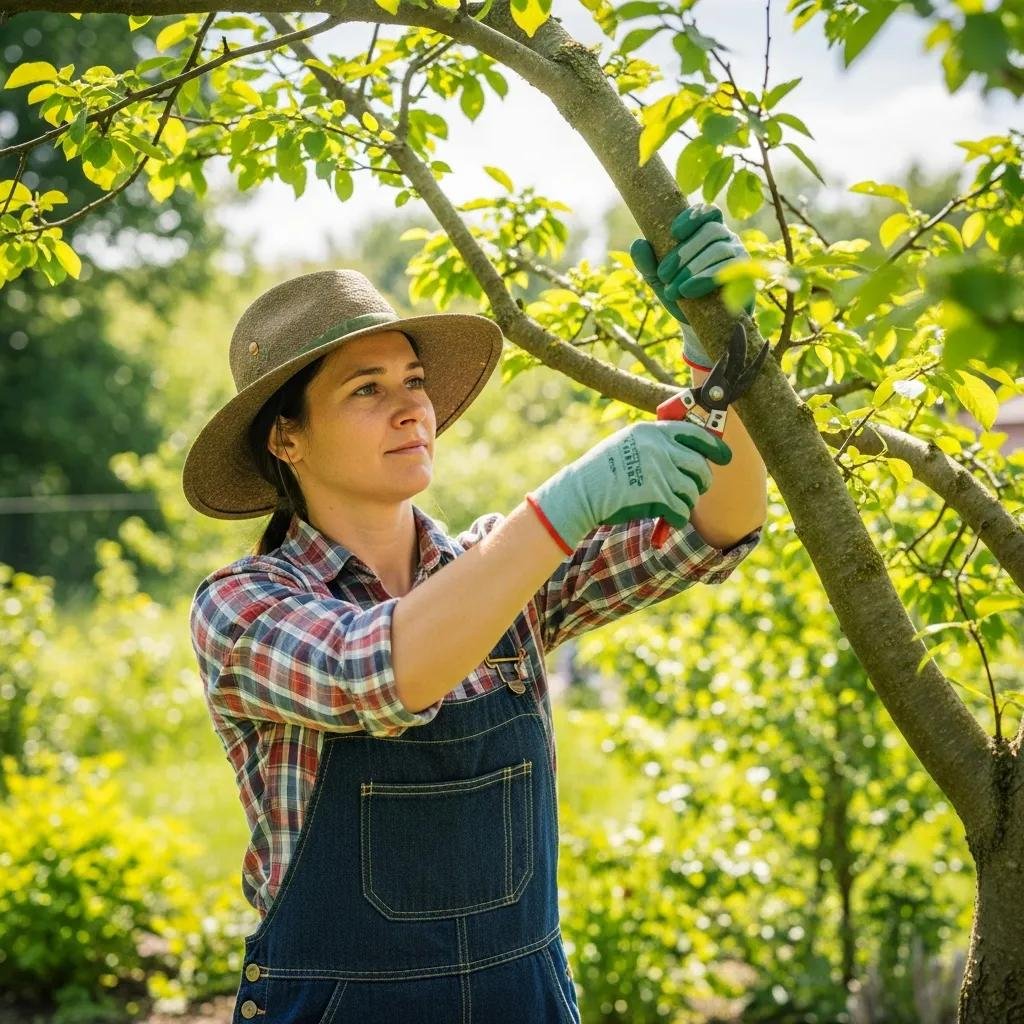
Ultimate Guide to Tree Trimming & Pruning Techniques: How to Prune a Tree for Health, Safety, and Aesthetics
Proper tree trimming and pruning are deliberate practices that shape growth, remove hazardous or diseased wood, and optimize a tree’s physiological function for health, safety, and aesthetics. This guide explains why pruning matters, how targeted techniques like crown thinning or structural pruning work, when to schedule work for different species, and which tools and safety practices protect both trees and people. Readers will gain practical step-by-step instructions — including the three-cut method for removing large limbs — plus seasonal calendars and tool-selection guidance suitable for homeowners and aspiring tree pruning beginners. We also cover common mistakes that shorten a tree’s life and clear decision points for when to hire a professional arborist. Throughout the article you’ll find featured-snippet friendly summaries, comparison tables to speed decision-making, and checklists to apply immediately to your landscape maintenance plan. Understanding these fundamentals will help you prune with confidence, reduce disease risk, and improve your property’s curb appeal.
What Are the Key Benefits of Tree Pruning and Trimming?
Tree pruning and trimming are targeted interventions that remove dead or excess wood, improve airflow and light penetration, and shape structural growth to reduce failure risk. By selectively removing branches, pruning redirects a tree’s resources to healthy tissues, lowers the chance of pest or pathogen spread, and enhances structural integrity for longer lifespan. The result is improved tree health, reduced hazards to people and property, better fruit or flower production, and enhanced aesthetic value that supports landscape design goals. Below are the primary benefits presented succinctly for quick reference and featured-snippet use.
Tree pruning delivers measurable outcomes that justify regular maintenance and occasional professional assessment; the next section compares those benefits with typical homeowner considerations for hiring trained help.
| Benefit | Attribute | Typical Measurable Outcome |
|---|---|---|
| Tree health | Removal of dead/diseased wood | Reduced pathogen spread; improved vigor |
| Safety | Hazard mitigation (dead limbs, clearance) | Lowered risk of branch failure and property damage |
| Aesthetics | Canopy shaping and symmetry | Increased curb appeal and sightline improvement |
| Productivity | Fruit/flower management | Higher fruit set and improved harvest quality |
This table highlights how each pruning goal translates into a tangible value that homeowners and property managers can track.
Key benefits of pruning in list form:
- Improved Tree Health: Removing diseased or dead wood reduces pathogen reservoirs and supports robust growth.
- Reduced Safety Hazards: Eliminating weak or overhanging limbs lowers the risk of injury and structural damage.
- Enhanced Aesthetics: Shaping improves form and sightlines, boosting landscape appearance.
- Increased Productivity: Fruit and flowering trees respond with better yields after proper structural pruning.
These benefits explain why many property owners include pruning in annual landscape maintenance; understanding proper methods next clarifies how to achieve these outcomes without damaging trees.
How Does Pruning Improve Tree Health and Longevity?
Pruning improves tree health by removing sources of decay and by altering the canopy to increase light and air circulation, which limits fungal growth and insect harborage. When dead, damaged, or crossing branches are cut away, the tree reallocates carbohydrates and growth hormones to remaining tissues, enhancing overall vigor. Proper cuts respect the branch collar and wound compartmentalization, allowing the cambium to seal exposures and limit decay progression. For example, selective thinning often reduces interior shade and moisture retention, lowering the chance of chronic fungal infections and improving long-term resilience against stress and storm damage.
Understanding these physiological mechanisms leads naturally to how pruning also reduces hazards and improves aesthetics, which is covered in the following subsection.
In What Ways Does Pruning Enhance Property Safety and Aesthetics?
Pruning enhances safety by removing branches that threaten structures, vehicles, paths, or utility clearances, and by correcting weak attachments that are likely to fail during storms. A well-executed raise or trim can improve pedestrian sightlines and recuce pest harborage, which also minimizes maintenance headaches. Aesthetically, selectively reducing canopy density and balancing scaffold branches creates pleasing form and proportion that improves curb appeal and perceived property value. Removing hazardous limbs and shaping canopy form therefore delivers both practical safety benefits and measurable aesthetic returns, making pruning a cost-effective part of landscape stewardship.
These safety and aesthetic improvements form the basis for choosing specific pruning methods, which we’ll explain next.
Which Essential Tree Pruning Methods Should You Know?
Essential pruning methods are distinct approaches used to meet different objectives: crown thinning for airflow, crown raising for clearance, and crown reduction for size control while retaining form. Each method targets specific structural and physiological outcomes and uses different cutting patterns and removal percentages to avoid stressing the tree. Understanding when to apply crown thinning versus structural pruning or deadwooding helps homeowners decide what is safe for DIY work and what requires professional intervention. Below are concise method definitions optimized for quick decision-making.
Homeowners benefit from an overview of these approaches before learning the three-cut method used to remove larger branches safely.
- Crown Thinning: Reduce interior branch density to improve light and air while maintaining natural shape.
- Crown Raising: Remove lower branches to increase clearance for pedestrians and sightlines.
- Crown Reduction: Shorten branch length to lower height or spread without harsh topping.
- Deadwooding: Remove dead branches to prevent failures and disease spread.
- Structural Pruning: Train young trees to develop strong scaffold branch architecture.
These short definitions help homeowners choose the appropriate technique, and the next subsection compares the major crown treatments side-by-side.
What Are the Differences Between Crown Thinning, Raising, and Reduction?
Crown thinning selectively removes small branches throughout the canopy to increase airflow and light, typically removing no more than 10–30% of live foliage to avoid stress. Crown raising focuses on removing lower limbs to create clearance, typically applied in urban or walkway settings to maintain lines of sight and safe vehicle or pedestrian passage. Crown reduction shortens long or overextended branches to reduce lever forces on the trunk; this method requires careful selection of secondary branches to preserve form and avoid creating large wounds. Each method carries trade-offs: thinning can expose the interior wood but improves health, raising can alter natural form but increases safety, and reduction must be done judiciously to prevent decay if cuts are too large or made incorrectly.
Recognizing these differences clarifies proper cutting techniques like the three-cut method, which prevents bark tear and fosters sound wound closure.
How to Perform Proper Pruning Cuts Using the Three-Cut Method?
Removing large branches safely uses the three-cut method: make a small undercut near the branch base, a top cut further out to drop the branch, and a final cut outside the branch collar to finish. Step 1 (relief cut) prevents bark tear by interrupting the tearing action; Step 2 (top cut) removes the weight so the final cut is controlled; Step 3 severs the stub just outside the branch collar so the tree can compartmentalize the wound. Use a sharp pruning saw sized to the branch diameter, keep cuts smooth, and avoid cutting into the collar or leaving stubs that slow healing. Numbered steps below provide a featured-snippet friendly how-to sequence.
Experts emphasize the importance of this technique for preventing damage during limb removal.
Three-Cut Method for Pruning: Preventing Bark Tearing
As with any proper pruning cut, the three-cut method for drop-crotching a tree should be used (Fig. 6). First, use a back cut to prevent bark tearing.
- Make an undercut: Saw from the underside about 12–18 inches from the trunk to stop bark tearing.
- Make a top cut: Saw from above slightly farther out to drop the limb safely.
- Make the final cut: Remove the remaining stub just outside the branch collar without cutting into it.
Following this method minimizes bark ripping and promotes faster wound compartmentalization, which ties directly to the health benefits described earlier.
When Is the Best Time to Prune Trees for Optimal Results?
Pruning timing matters because seasonal growth patterns, sap flow, and disease vectors affect wound response and pathogen risk; most pruning is best done in the dormant season (late winter to early spring). Dormant-season pruning minimizes sap loss, reduces attraction to pests, and allows clear visibility for structural assessment before leaf-out. Exceptions exist for corrective summer pruning and species that bleed or are vulnerable to specific pathogens, so species-specific timing is important. Below is a compact seasonal reference to guide practical scheduling decisions for common tree genera.
Research consistently demonstrates how the timing and extent of pruning significantly influence a tree’s physiological responses and overall development.
Impact of Pruning Season & Intensity on Tree Growth
This study aimed at determining the effects of pruning season and intensity on growth and physiology of four hybrid poplars.
Knowing why dormant-season pruning is generally preferred helps explain species-level exceptions that homeowners must consider in planning work.
| Tree Species | Best Pruning Window | Reason / Notes |
|---|---|---|
| Oaks | Late fall–early spring (avoid active oak wilt vector periods) | Reduce oak wilt spread by avoiding peak vector season |
| Maples | Late winter–early spring | Dormant pruning reduces sap bleeding and stress |
| Fruit trees | Late winter (dormant) and light summer shaping | Dormant pruning improves fruiting; summer for corrective cuts |
| Evergreens | Early spring or late summer | Avoid heavy pruning in deep winter cold or heat stress |
Why Is the Dormant Season Ideal for Most Tree Pruning?
The dormant season reduces sap flow and metabolic activity, which lowers stress on the tree and decreases attraction to wood-boring insects and some pathogens. Leaf-off conditions improve visibility of branch structure and defects, allowing precise structural pruning and better planning for follow-up care. Dormant pruning also aligns with many municipal and contractor schedules, making it easier to coordinate work before spring growth demands return. Reduced insect activity in winter further lowers the likelihood of pruning wounds becoming infestation points, which supports long-term tree resilience.
These biological advantages inform species-specific adjustments, which are important when pruning oaks, maples, or fruit trees.
How Does Pruning Timing Vary by Tree Species Like Oaks, Maples, and Fruit Trees?
Species differences change optimal pruning windows: oaks should generally avoid pruning during periods when oak wilt vectors are active, maples are usually pruned in late winter to minimize bleeding, and fruit trees respond well to dormant pruning for structure and productivity. For fruit-bearing species, heavy structural pruning in dormancy helps stimulate balanced fruiting wood, while light summer pruning can refine canopy shape without sacrificing yield. Regional disease pressures and climate nuances can also shift these windows, so local arboricultural guidance is valuable. Reference the seasonal table above when planning specific pruning tasks.
Recognizing species exceptions helps you choose the safest timing and prevents unintended disease spread or reduced productivity.
What Tools and Safety Practices Are Essential for Tree Trimming and Pruning?
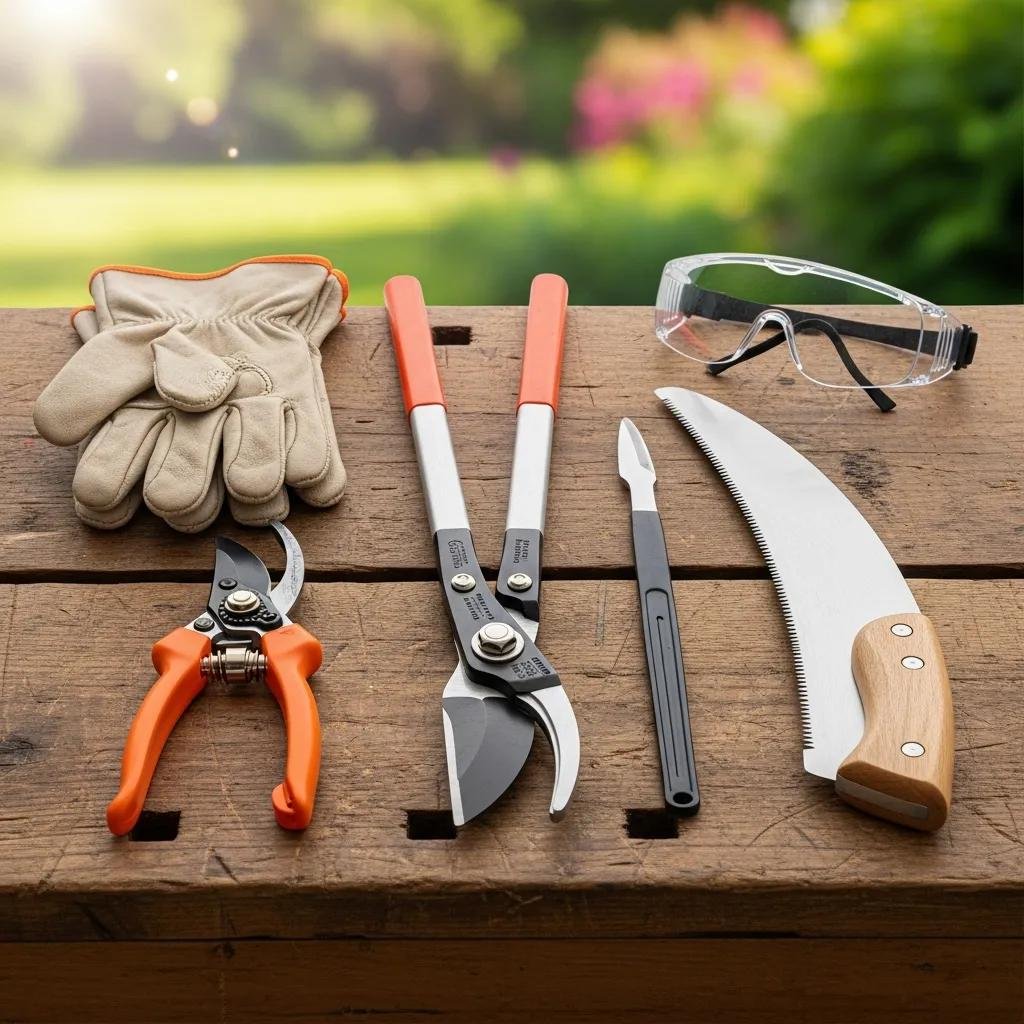
Effective pruning requires the right tools matched to branch size plus disciplined safety practices that protect people and property during cuts. Hand pruners, loppers, pruning saws, and pole pruners cover most homeowner tasks, while chainsaws and rigging equipment are reserved for trained professionals. Tool maintenance — sharpening, cleaning, and disinfecting between diseased trees — reduces tool resistance and pathogen transmission. Personal protective equipment (PPE) such as eye protection, gloves, helmets for larger work, and stable ladder protocols are crucial to reduce injury risk. The table below helps match tools to typical tasks and recommended specs for safer, more efficient pruning.
A practical tools comparison helps you select gear for each task and understand when a job exceeds DIY capabilities.
| Tool | Best Use Case | Recommended Size / Specs |
|---|---|---|
| Hand pruners (bypass) | Small stems and precise cuts | Cuts to 1″ diameter; bypass type for clean scissor-like cuts |
| Loppers | Medium branches | Long-handled loppers for 1″–2″ branches with compound action |
| Pruning saw | Larger branches | Curved or straight saw for 2″–6″ branches; sharp, coarse-toothed blade |
| Pole pruner | High small branches | Extendable pole with saw head; safe for small-diameter cuts overhead |
| Chainsaw (pro use) | Large removals | For trained users only; appropriate bar length and safety gear required |
Which Pruning Tools Are Recommended for Different Tree Care Tasks?
Match tool cutting capacity to branch diameter and job type: hand pruners for precise cuts under 1″, loppers for 1″–2″, saws for larger limbs, and pole tools for reach without climbing. Choose bypass hand pruners for live wood to avoid crushing, keep lopper pivots lubricated and blades sharp, and select pruning saws with comfortable grips for controlled cuts. Disinfect tools with appropriate solutions after cutting diseased material to prevent cross-contamination, and replace worn blades to maintain clean cuts that the tree can seal efficiently. Proper tool choice and maintenance reduce strain, speed work, and improve wound outcomes.
Ensuring safe use of tools sets up the next discussion on essential safety practices for pruning work.
What Are the Best Safety Practices When Pruning Trees?
Safety practices start with PPE: close-fitting eye protection, puncture-resistant gloves, sturdy non-slip footwear, and head protection for larger tasks. Use a stable ladder with a second person spotting and avoid overreaching; when work involves significant height, large-diameter limbs, or proximity to power lines, hire professionals. Establish a work zone beneath the canopy, clear bystanders, and plan drop paths for removed limbs. Red flags that require professional services include weakly attached scaffold branches, large-diameter cuts, and tasks near utility infrastructure. A short checklist below summarizes critical precautions homeowners should follow.
- Wear appropriate PPE: Eye protection, gloves, and non-slip footwear for all pruning.
- Secure ladders and maintain three points of contact: Never overreach while cutting.
- Establish a clear work zone: Keep bystanders and pets well away from drop areas.
- Hire pros for high-risk tasks: Contact with power lines, large limbs, or complex rigging.
These safety steps reduce accidents and align with the decision to engage professionals when risk exceeds homeowner capabilities.
What Common Tree Pruning Mistakes Should You Avoid?
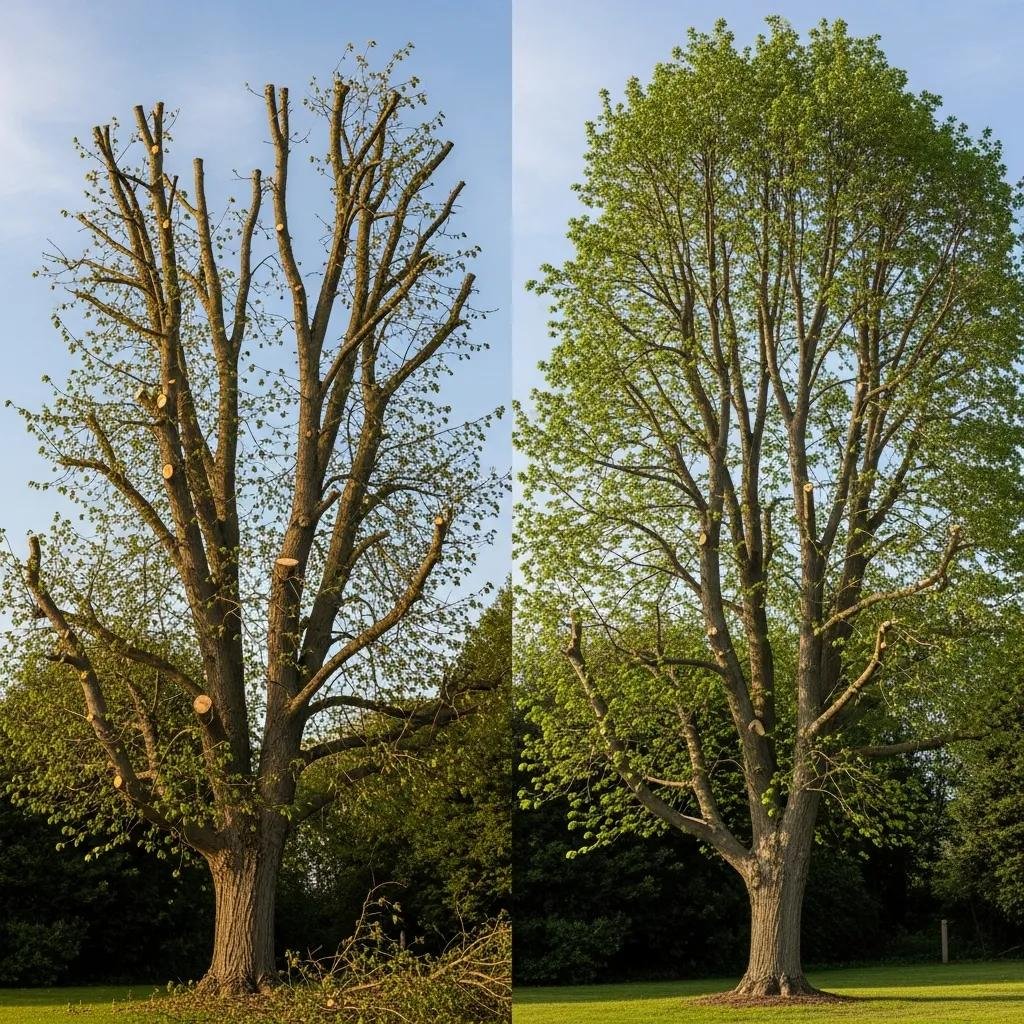
Common mistakes like topping, leaving long stubs, and removing excessive live crown can cause long-term decline by disrupting vascular flow and creating decay entry points. Topping promotes weak, fast-growing sprouts with poor attachment and increases long-term failure risk, while flush cuts that remove the branch collar inhibit proper wound closure. Over-pruning more than about 25% of the live crown at once causes shock and reduces carbohydrate reserves needed for recovery. Understanding these pitfalls informs corrective actions and alternatives such as crown reduction and structural pruning.
The tree’s natural defense mechanisms, particularly wound compartmentalization, are critical for preventing decay, and improper cuts can severely compromise this process.
Tree Wound Compartmentalization & Decay Prevention
There is a strong relationship between strong Wall 2 compartmentalization and the ability of the tree to restrict the amount of wood discoloration and decay following improper flush pruning of branches.
- Topping trees: Severely reduces structural integrity and encourages weak regrowth.
- Leaving stubs: Prevents proper collar-based healing and increases decay risk.
- Over-pruning: Removing too much live foliage weakens the tree and reduces resilience.
- Flush cuts into the collar: Damages the tree’s natural wound-sealing tissue and slows recovery.
Knowing what not to do prepares you to adopt best practices, which we outline in the following subsections.
Why Is Avoiding Topping and Leaving Stubs Important?
Avoiding topping and stubs is crucial because these practices undermine a tree’s natural defense and structural framework, increasing decay and failure risk. Topping removes large portions of the crown and prompts rapid, weak sprout growth that places greater stress on remaining branches and the trunk. Leaving a stub prevents the branch collar from guiding callus formation, resulting in slower compartmentalization and elevated decay potential. Instead of topping, targeted crown reduction and structural pruning preserve form while reducing hazardous extension, offering safer long-term outcomes for both trees and property.
Appreciating these physiological consequences reinforces the role of correct pruning in disease prevention, which we examine next.
How Can Proper Pruning Prevent Tree Disease and Damage?
Proper pruning prevents disease by removing infected tissues, improving air circulation to discourage fungal growth, and timing cuts to avoid vector or pathogen peaks. Sanitation is essential: disinfect tools between cuts on diseased trees, and avoid pruning during active pathogen spread seasons for species with known vulnerabilities. Correctly sized and placed cuts also minimize entry points for decay organisms, allowing the tree’s compartmentalization processes to isolate damage efficiently. Implementing disciplined pruning schedules and sanitation protocols reduces long-term decline and limits the need for more invasive treatments.
These disease-prevention practices inform decisions about when to call an arborist for complex diagnosis and remedial pruning.
When Should You Hire a Professional Arborist for Tree Pruning Services?
Hire a professional arborist when trees are large, when limbs pose a significant hazard, when structural pruning is required, or when disease diagnosis and treatment are needed. Certified arborists bring diagnostic skills to identify pests, pathogens, or structural defects, and they have training in safe rigging, large-diameter cutting, and property protection. Costs reflect tree size, access difficulty, and required equipment, but professional pruning is an investment in long-term tree health that often prevents higher future removal or repair expenses. The next section lists benefits of hiring certified professionals and practical tips for evaluating quotes and scope.
Considering these service benefits helps homeowners weigh short-term cost against long-term value and safety outcomes.
What Are the Benefits of Hiring a Certified Arborist?
Certified arborists provide species-specific knowledge, structural pruning expertise, and safe rigging practices that protect both the tree and surrounding property. They can diagnose complex health issues, recommend integrated management plans, and apply pruning techniques that promote long-term stability and aesthetic goals. Arborists also commonly carry insurance and follow safety standards that minimize liability and ensure proper cleanup and disposal of debris. Relying on certified expertise reduces the risk of improper cuts that can shorten tree life or create future hazards.
How Do Tree Service Costs Relate to Long-Term Tree Health and Property Value?
Tree service costs depend on tree size, species, accessibility, complexity of work, and whether specialized equipment or crew rigging is needed; larger trees and difficult access typically increase prices. Investing in professional pruning can lower future costs by preventing storm damage, reducing the likelihood of emergency removals, and preserving mature trees that add aesthetic and market value to a property. When evaluating quotes, compare the scope of work, safety measures, insurance coverage, and references rather than price alone. A well-documented pruning plan that focuses on structural health and long-term vitality offers the best return on investment for landscape stewardship.
For homeowners unsure about DIY limits, a certified arborist can provide a scoped plan and safety assurances — and if tasks exceed homeowner skills, professional intervention is the prudent choice.
(Business Integration — Practical Next Steps)
If you need hands-on pruning or a formal assessment, seek a certified arborist who provides a written scope, safety plan, and references. Prioritize professionals who outline the pruning objectives (health, safety, aesthetics), explain timing recommendations, and identify follow-up maintenance steps. Request a clear estimate that breaks down tree size, access issues, equipment needs, and expected outcomes so you can compare quotes effectively. Choosing experienced professionals for high-risk or structural work protects your landscape investment and ensures pruning supports long-term tree health.
(Final Note Integrated into Last Section)
When in doubt, consult a certified arborist for inspection and a tailored pruning plan; preventive care typically costs less than emergency removals and preserves the value and safety of your trees.